


 By
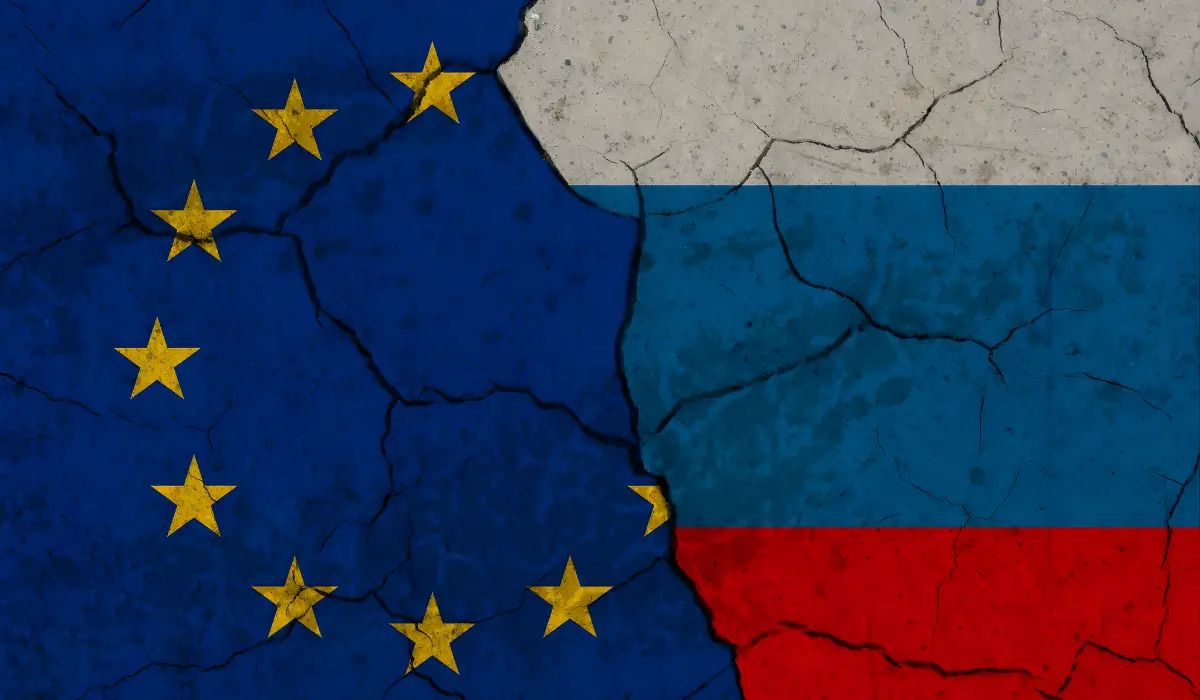
By A new and increasingly complex phase is unfolding in the Europe vs Russia clash, one that extends far beyond the ongoing conflict in Ukraine and continues to test Europe’s political, economic, and security institutions. Despite the absence of a formal declaration of war, the confrontation has intensified across military, cyber, and economic domains, evolving into what experts now describe as a “cold confrontation.” This prolonged standoff highlights the shifting nature of modern warfare, where traditional battlefields are complemented by digital attacks, sanctions, and strategic geopolitical maneuvering.
Ongoing Conflict in Ukraine
The situation in Ukraine remains tense, with Russian forces maintaining control over portions of the eastern regions, while Ukrainian units, bolstered by Western intelligence and weaponry, continue to defend major urban centers. Over the years, the conflict has become a war of attrition, with neither side achieving a decisive victory.
The European Union has emerged as Kyiv’s most significant financial and military supporter, committing over €100 billion in aid since the start of the conflict. Despite repeated calls for ceasefires and negotiations, Moscow has shown little willingness to compromise.
“Russia has not shown any interest in meaningful negotiations,” EU foreign affairs chief Josep Borrell stated during a recent press briefing. “We will continue to support Ukraine’s sovereignty for as long as it takes.”
This prolonged conflict underscores a broader geopolitical challenge: maintaining a balance between deterring aggression and preventing escalation while addressing humanitarian and economic consequences.
Energy and Economic Sanctions: A Prolonged Strain
One of the most significant fronts in the Europe vs Russia confrontation lies in the economic and energy sectors. The EU has implemented multiple rounds of sanctions against Russia, citing human rights violations, war crimes allegations, and breaches of international law. The latest measures targeted additional Russian banks, restricted dual-use exports, and tightened financial oversight.
In response, Russia has pivoted its trade toward Asia and the Global South, strengthening energy exports to countries like China and India. Gas flows to Europe have dramatically decreased, while Moscow has developed ruble-based payment systems and alternative financial frameworks in collaboration with BRICS partners.
For the EU, energy diversification has become a top priority. Agreements with the United States, Norway, and Qatar have helped reduce dependence on Russian energy, particularly liquefied natural gas (LNG). Although energy-related inflation has eased compared to previous years, household energy costs remain elevated, creating pressure on European policymakers to balance sanctions with domestic economic stability.
This economic tug-of-war highlights the intricate relationship between geopolitical conflict and global trade networks, illustrating how energy independence and economic resilience are critical components of national security.
Russia’s Cyberattacks and Disinformation Campaigns
Alongside military and economic pressure, Russia has significantly escalated cyber operations targeting Europe. Government institutions, power grids, hospitals, and election infrastructure have all been subjected to cyber intrusions, while coordinated disinformation campaigns aim to destabilize societies from within.
For instance, a cyberattack in Germany disrupted railway operations for several hours. While authorities attributed the incident to pro-Russian hacking groups, Moscow denied any involvement. The EU has responded by expanding Cyber Rapid Response Teams (CRRT) and launching the European Cyber Shield, a joint initiative aimed at improving cyber coordination among member states.
“These aren’t isolated incidents,” stated Estonian Prime Minister Kaja Kallas. “They are part of a systematic strategy to destabilize Europe from within.”
The cyber front of this confrontation underscores the evolving nature of warfare, where attacks are increasingly digital, subtle, and strategic, designed to weaken infrastructure, public trust, and governance without direct military engagement.
NATO’s Response and Russia’s Military Buildup
While the EU lacks a unified military force, cooperation with NATO has intensified since the escalation of the Ukraine conflict. Troop rotations in Poland and the Baltic states have increased, and the accession of Finland and Sweden to NATO has reshaped security dynamics in Northern Europe.
Meanwhile, Russia has reinforced its western military district, expanded bases in Kaliningrad, and conducted joint exercises with Belarus near the EU’s eastern frontier. Military analysts continue to warn about vulnerabilities, particularly the Suwałki Gap, a narrow strip between Poland and Lithuania considered strategically crucial.
“The risk of unintended escalation is real,” said James Mitchell, senior fellow at the European Council on Foreign Relations. “A misstep in these border regions could quickly ignite a broader conflict.”
This heightened military posture highlights the delicate balance between deterrence and provocation, where both sides seek to assert strength without triggering direct confrontation.
Diplomatic Breakdown and BRICS Strategic Alliances
Diplomatic channels between Europe and Russia have largely broken down. Ambassadors have been expelled, bilateral talks suspended, and Russian officials face travel bans across most of Europe.
In parallel, Russia has deepened alliances with China, Iran, and other BRICS nations, promoting trade integration and alternative financial systems outside Western-aligned institutions. A recent summit in Kazakhstan highlighted Russia’s strategic focus on strengthening ties with these countries, positioning itself in contrast to Western influence.
Within the EU, divisions exist regarding sanctions and the level of support for Ukraine. Countries such as Hungary and Slovakia have occasionally urged restraint, citing domestic economic pressures. Nevertheless, the European consensus largely supports continued pressure on Moscow.
Public Opinion: Resilient Yet Concerned
Public sentiment across Europe has remained broadly supportive of Ukraine, even amid growing fatigue. Surveys from Germany, France, and Spain reveal strong opposition to Russian aggression but also rising concerns about the economic and social impacts of prolonged conflict.
Right-wing and populist groups have leveraged these anxieties, promoting an “EU-first” approach or advocating negotiations with Moscow. Meanwhile, the Kremlin maintains tight control over domestic narratives, framing its military actions as necessary defense against NATO expansion.
The interplay between public opinion, political narratives, and policy decisions underscores the multidimensional challenges that European governments face in managing a protracted geopolitical crisis.
Looking Ahead: The Future of Europe-Russia Tensions
The standoff between Europe and Russia shows no immediate signs of resolution. Diplomatic backchannels remain minimally active, and potential flashpoints in Georgia, Moldova, and the Baltic region could escalate tensions further. Security experts warn that without careful management, the conflict could evolve unpredictably, affecting both European stability and global power balances.
“This isn’t the Cold War, but it’s certainly not peace either,” said Lena Bauer, senior analyst at Berlin’s Centre for Strategic Affairs. “It’s a layered contest that may last well into the next decade.”
The Europe-Russia conflict is no longer just a territorial dispute; it represents a broader contest over global authority, governance norms, and the strategic architecture of the modern world order. The outcomes will hinge not only on leadership decisions in Brussels and Moscow but also on societal resilience, technological capabilities, and the ability of international actors to mediate tensions.
Conclusion
The Europe vs Russia confrontation has evolved into a complex, multi-dimensional crisis spanning military, economic, cyber, and diplomatic domains. The ongoing Ukraine conflict, combined with sanctions, cyberattacks, and geopolitical maneuvering, has created a prolonged standoff with far-reaching implications.
As international alliances shift and domestic pressures intensify, the EU faces the dual challenge of maintaining security and supporting Ukraine while safeguarding economic stability. For Russia, the focus remains on asserting regional influence and countering Western pressure through strategic partnerships with non-Western nations.
Ultimately, the future of Europe-Russia relations will depend on the ability of both sides to manage escalation, leverage diplomacy, and navigate a rapidly changing global order. The international community will continue to watch closely, recognizing that the stakes extend well beyond the European continent.
FAQs: Europe vs Russia Crisis
Q1: Is Europe and Russia at war?
A: There is no formal declaration of war, but military, economic, and cyber confrontations have intensified, creating a prolonged geopolitical standoff.
Q2: How has the Ukraine conflict influenced EU-Russia relations?
A: The conflict has strained relations, prompting sanctions, increased military readiness, and strengthened EU support for Ukraine.
Q3: What role does NATO play in this confrontation?
A: NATO coordinates troop rotations, strengthens defense in Eastern Europe, and works with EU nations to deter Russian aggression.
Q4: How has Russia responded to EU sanctions?
A: Russia has pivoted trade toward Asia and BRICS countries, developed alternative payment systems, and reduced energy exports to Europe.
Q5: Are cyberattacks part of the conflict?
A: Yes, Russia has conducted cyber intrusions and disinformation campaigns targeting European infrastructure, highlighting the evolving nature of modern conflict.