



 By
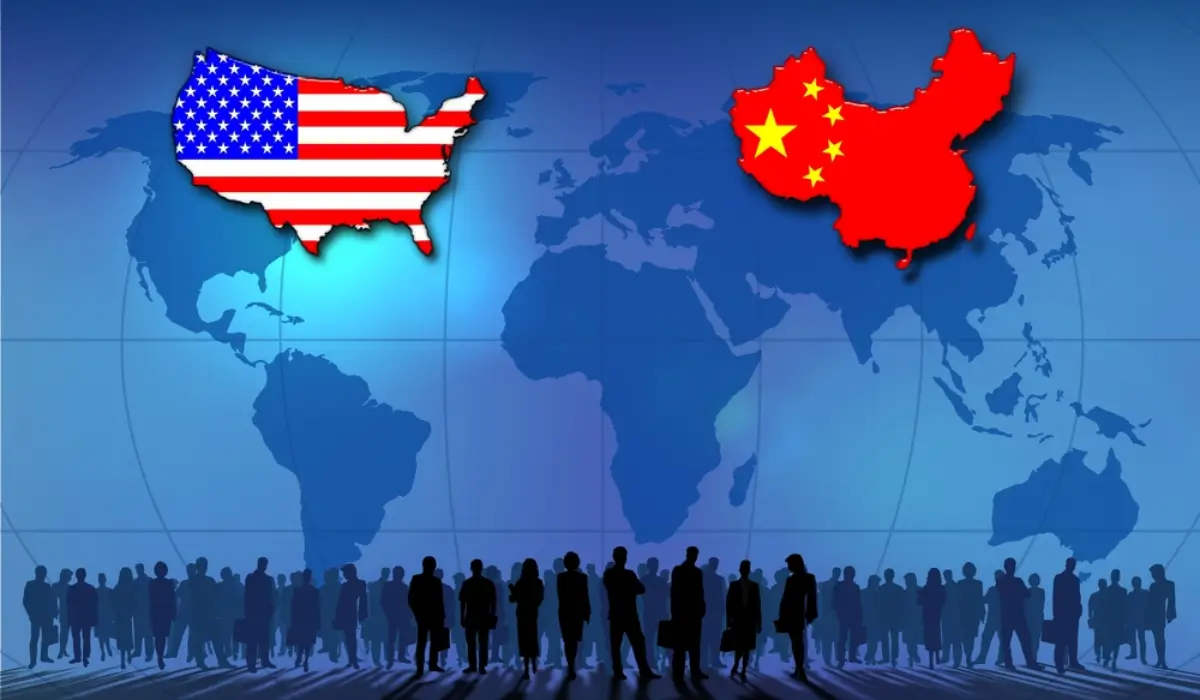
By Over the last decade, China has transformed from the world’s factory into its laboratory, reshaping global manufacturing, technological innovation, and trade. While Chinese innovation is impressive, the ongoing competition in China vs US economic hegemony shows that the country is not yet a full challenger to American dominance. Understanding the dynamics of China vs US economic hegemony is crucial for business leaders, policymakers, and investors navigating the global economy.
This article examines China’s rise as an innovative power, its economic achievements, and why America’s structural advantages continue to sustain its global dominance — even as the US-China competition intensifies.
From “World’s Factory” to “World’s Laboratory”
Historically, China was considered the world’s factory: a low-cost assembly hub for technologies designed elsewhere. Over the last decade, however, China has leapfrogged into high-tech innovation, establishing itself as one of the two leading economies in research and development. Chinese firms now develop cutting-edge technologies in areas such as artificial intelligence (AI), electric vehicles (EVs), telecommunications, and renewable energy, rivaling their American counterparts.
China’s share of global manufacturing has risen dramatically, from 9% in 2004 to 30% in 2023 — nearly double that of the US (16%) and exceeding the combined shares of Japan, Germany, South Korea, and the UK. This scale of dominance in manufacturing is unprecedented since the post-World War II era in the United States.
China’s industrial rise has been fueled by high investment rates, averaging over 40% of GDP in recent decades, compared to 22% in the US and 18% in the UK. With production capacity exceeding domestic demand by two to three times and a consistent trade surplus since 1993, China has built a global manufacturing ecosystem unmatched in scale.
How China Became a Global Innovator
China’s success in innovation is closely linked to its state-driven economic model. The Chinese Communist Party (CCP) has implemented long-term industrial policies to drive technological advancement, most notably the “Made in China 2025” initiative. This program channels state resources into strategic sectors including robotics, AI, aerospace, EVs, and advanced telecommunications.
Key factors behind China’s innovation engine include:
-
Centralized political strategy: The government can steer industries, address market failures, and create incentives for domestic technological development.
-
High R&D investment: China produces around 50,000 STEM PhD graduates annually, surpassing the US at 34,000.
-
Innovation hubs: Tech cities in southern China rival Silicon Valley in scale and infrastructure. Huawei’s Shanghai research campus, for instance, is ten times the size of Google’s headquarters.
-
Control of critical resources: China dominates rare earth minerals and related industries, essential for EVs, renewable energy, and defense technologies.
This approach has allowed China to move beyond low-cost manufacturing to become a global technology leader, with innovation capabilities in both universities and domestic companies that rival the United States.
China’s Role as a Disruptor in the Global Economy
China’s rapid technological progress has disrupted global supply chains and altered the international trade landscape. Key areas of influence include:
-
Telecommunications and 5G infrastructure
-
Advanced manufacturing of solar panels, wind turbines, and EV components
-
High-speed rail, drones, satellites, and heavy machinery
-
Pharmaceuticals and healthcare technologies
China’s dominance in these sectors has generated geopolitical leverage, as many countries increasingly rely on Chinese technology and raw materials. While the US retains global influence, China’s strategic positioning enables it to negotiate from a position of strength, especially in Asia, Africa, and parts of Europe.
The US-China Economic Power Balance
Despite China’s technological rise, the United States maintains structural advantages that preserve its global hegemony:
-
Military Superiority: The US accounts for nearly 40% of global military spending, operates over 700 overseas bases, and maintains seven aircraft carriers in the Pacific Fleet.
-
Financial Dominance: The US dollar remains the primary reserve currency worldwide. Countries depend on dollars for trade and investment, giving the US significant leverage in global finance.
-
Control of Global Payment Systems: The SWIFT network, which facilitates international bank transactions, is dominated by US institutions, giving America oversight over cross-border payments.
-
Corporate Profit Leadership: US-headquartered transnational corporations capture the majority of global profits across high-tech sectors, even when production occurs in China. Apple’s iPhone supply chain is a prime example — manufactured in China but largely generating profits for an American company.
While China has developed an alternative system, CIPS, to rival SWIFT and expand the yuan’s international use, the yuan remains a distant second to the dollar in global finance.
China’s Domestic Challenges
China’s ambition to compete with the US is tempered by internal constraints:
-
Aging population: China’s workforce is older than America’s, placing pressure on productivity and economic growth.
-
Income disparity: Average income in China remains about 20% of US levels, limiting domestic consumption and economic resilience.
-
Dependency on global markets: Many high-tech exports rely on foreign firms’ technology and intellectual property, meaning that profits often flow outside China.
These factors suggest that while China is a formidable innovator, it faces structural limitations that prevent it from fully supplanting US economic and geopolitical influence.
Implications for Global Business and Trade
China’s rise as an innovator has significant implications for international business and investment strategies:
-
Supply chain diversification: Companies must consider China’s dominance in EV components, rare earths, and advanced manufacturing when planning procurement.
-
Investment in local innovation: Nations and corporations may increase R&D spending to reduce reliance on Chinese technology.
-
Geopolitical risk management: Firms operating internationally must navigate tensions between China and the US, including tariffs, export restrictions, and technology bans.
For multinational corporations, understanding the balance of China vs US economic hegemony is essential to strategic planning in technology, manufacturing, and finance.
The Future of Innovation and Global Power
Over the next decade, China is poised to expand its leadership in AI, clean energy, and advanced manufacturing. Its tech hubs and state-led industrial strategy provide a platform for continued innovation. However, several key points suggest the US will remain a hegemonic power:
-
Strong institutions and rule-of-law-based markets foster entrepreneurship and innovation.
-
A large domestic market and global alliances strengthen economic resilience.
-
Military and financial dominance provide leverage in geopolitical disputes.
China’s President Xi Jinping is clearly committed to challenging American supremacy, leveraging domestic innovation to increase global influence. Yet the structural advantages of the US, combined with China’s internal demographic and economic constraints, indicate that full replacement of US hegemony is unlikely in the near future.
Conclusion
China’s evolution from the world’s factory to the world’s laboratory is a remarkable achievement in economic and technological development. It has transformed global manufacturing, established itself as a leader in innovation, and created new geopolitical leverage.