


 By
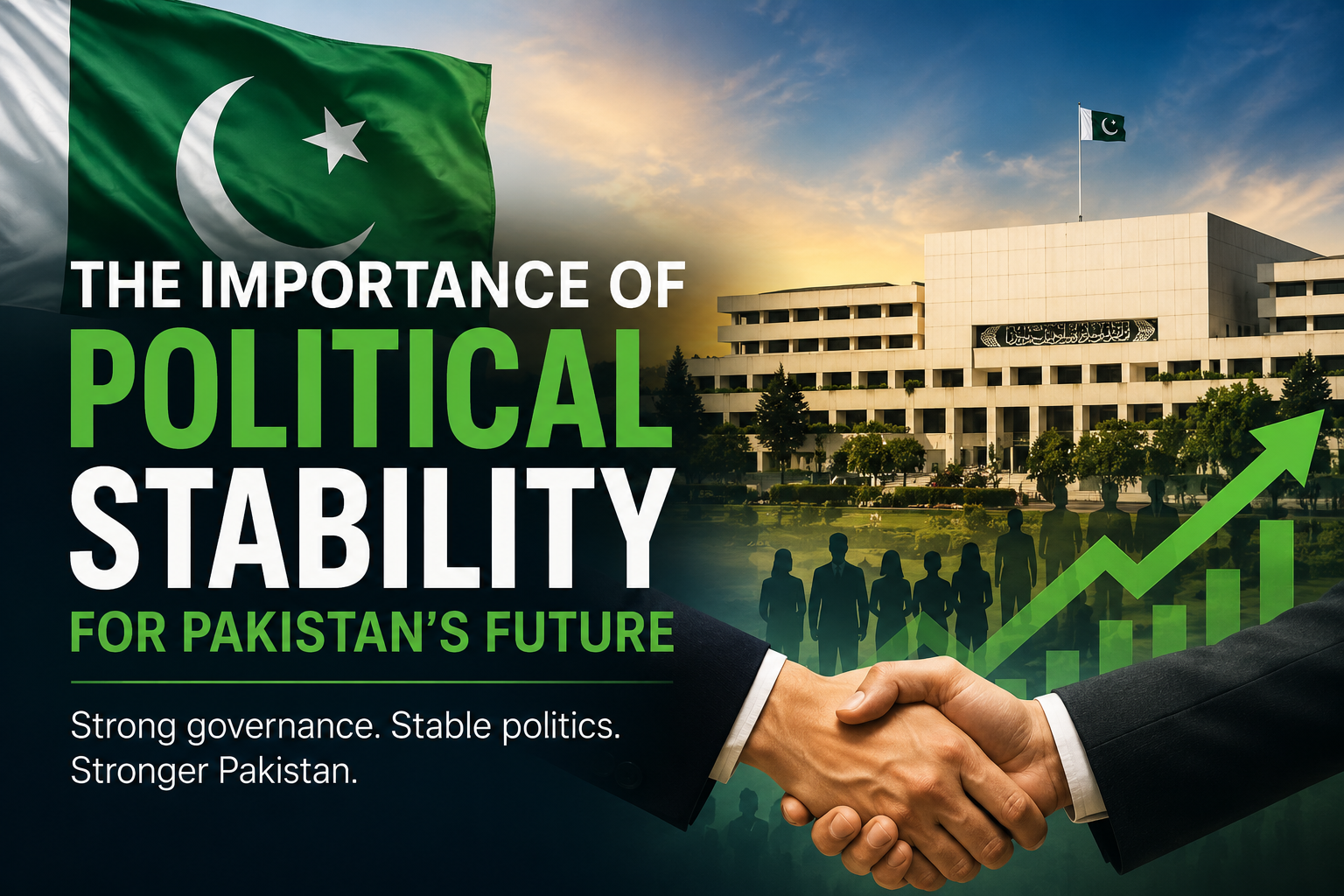
By Political stability has always played a significant role in shaping the future of Pakistan. A stable political environment helps governments make long-term decisions, encourages economic growth, attracts investment, and builds public confidence in state institutions. While political differences are a natural part of any democratic society, maintaining stability is essential for sustainable development and national progress.
Pakistan has experienced various political changes throughout its history. Every transition has brought new opportunities a
s well as fresh challenges. Regardless of which political party is in government, the country’s long-term success depends on effective governance, transparency, and policies that benefit all citizens.
Why Political Stability Matters
Political stability creates an environment where governments can focus on development instead of continuous political uncertainty. When policies remain consistent, businesses gain confidence to invest, international partners strengthen economic cooperation, and public institutions work more efficiently.
For Pakistan, stability is especially important because the country is working to improve its economy, expand infrastructure, create employment opportunities, and strengthen public services. These goals require long-term planning that is difficult to achieve during periods of political unrest.
A stable political system also allows provincial and federal governments to work together on issues such as education, healthcare, energy, and economic reforms.
Economic Growth Depends on Strong Governance
The economy and politics are closely connected. Investors often evaluate a country’s political environment before making major business decisions. When policies remain predictable and institutions function effectively, investment becomes more attractive.
Pakistan has significant economic potential due to its strategic location, young workforce, agricultural resources, and growing technology sector. By improving governance and maintaining policy continuity, the country can create more opportunities for local businesses and encourage foreign investment.
Economic development also supports job creation, reduces poverty, and improves the overall quality of life for millions of people.
The Role of Democratic Institutions
Strong democratic institutions are the foundation of every successful democracy. Parliament, the judiciary, election authorities, and independent public institutions all contribute to maintaining balance within the political system.
Citizens expect these institutions to operate fairly, transparently, and according to the Constitution. Public trust increases when decisions are made through proper legal and democratic processes.
Political parties also have an important responsibility. Healthy debate, constructive criticism, and cooperation on national issues can strengthen democracy while ensuring that different viewpoints are represented.
Youth Participation in Politics
Pakistan has one of the youngest populations in the world. This presents both an opportunity and a responsibility. Young people are becoming increasingly interested in public policy, governance, entrepreneurship, and national development.
Through education, civic engagement, and responsible participation, young citizens can contribute to shaping Pakistan’s future. Social media and digital platforms have also made political discussions more accessible, allowing citizens to stay informed and express their opinions.
At the same time, it is important to verify information from reliable sources before sharing it online. Responsible digital citizenship helps reduce misinformation and promotes informed public discussion.
Challenges That Require Collective Efforts
Pakistan continues to face several important challenges, including inflation, unemployment, energy demands, climate-related risks, education reforms, and healthcare improvements. Addressing these issues requires cooperation among government institutions, policymakers, businesses, and civil society.
Rather than focusing only on political differences, national attention can also be directed toward practical solutions that improve everyday life for citizens. Long-term planning, evidence-based policymaking, and accountability can help achieve meaningful progress.
Looking Ahead
Pakistan’s future will depend on its ability to strengthen democratic institutions, maintain political stability, and implement policies that support inclusive economic growth. Every stakeholder—including elected representatives, public institutions, businesses, and citizens—has a role to play in building a stronger nation.
Political competition will always remain an important part of democracy, but cooperation on matters of national importance is equally essential. By encouraging dialogue, respecting constitutional processes, and focusing on development, Pakistan can continue moving toward greater stability and prosperity.
Conclusion
Political stability is more than just the absence of conflict; it provides the foundation for economic development, stronger institutions, and better public services. As Pakistan continues its journey toward progress, consistent governance, responsible leadership, and active citizen participation will remain key factors in shaping a brighter future.
With collective effort and a shared commitment to national development, Pakistan has the potential to overcome its challenges and build a more prosperous future for generations to come.