



 By
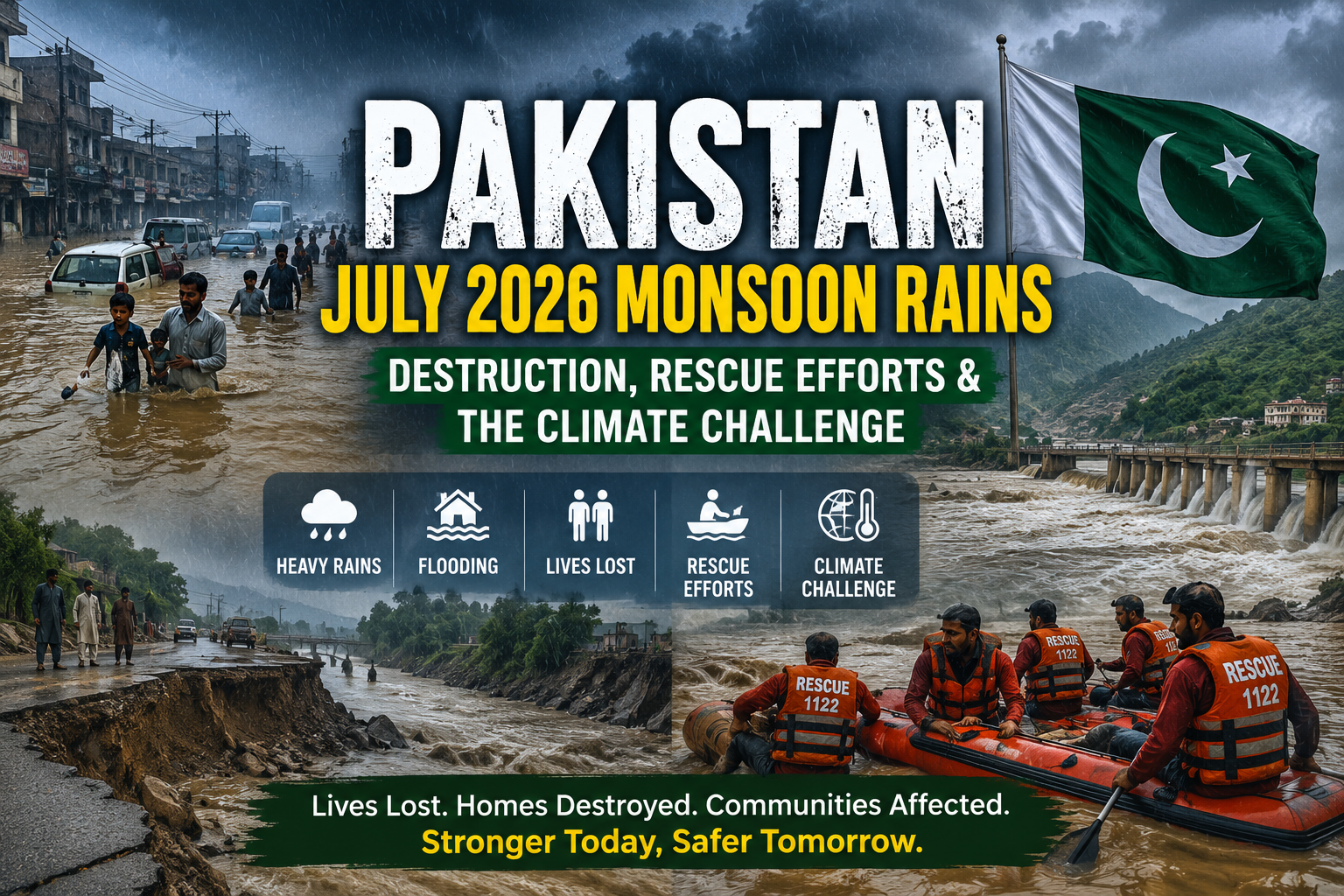
By July 2026 has become one of the most difficult months of the year for Pakistan as relentless monsoon rains continue to affect large parts of the country. What began as a seasonal weather system quickly developed into a nationwide emergency, causing widespread flooding, loss of life, infrastructure damage, and disruption to everyday life. Before the rains intensified, the Pakistan Meteorological Department (PMD) forecast heavy rainfall between July 19 and 23, while the National Disaster Management Authority (NDMA) warned that this year’s monsoon could bring 22 to 26 percent more rainfall than the previous season. Unfortunately, those predictions have proven accurate, leaving thousands of families struggling with the devastating consequences.
Rising Death Toll and Human Tragedy
The continuous rainfall has taken a heavy human toll across Pakistan. Since the beginning of the monsoon season on June 26, at least 57 people have lost their lives, while another 148 have been injured. During one 24-hour period alone, eight more deaths were reported, highlighting how rapidly the situation has deteriorated.
Khyber Pakhtunkhwa (KP) has suffered the greatest losses. Within just 48 hours, the province recorded 12 deaths, including five children, while many others were injured. Overall, KP has witnessed 35 monsoon-related fatalities since late June. Punjab has also experienced severe damage, particularly in Rawalpindi, Gujrat, Jhelum, Narowal, and Lahore, where heavy rainfall flooded roads, residential areas, and commercial districts. The disaster has damaged or destroyed hundreds of homes, killed livestock, and left sections of roads unusable, placing additional pressure on affected communities.
Why Has the Monsoon Become So Severe?
Several factors have contributed to the unusually intense monsoon season. According to the NDMA, Pakistan was expected to receive significantly more rainfall than last year. Rising temperatures have accelerated the melting of the country’s thousands of glaciers, increasing the volume of water flowing into rivers and streams during the rainy season.
Climate change has further intensified the crisis. Although Pakistan contributes less than one percent of global greenhouse gas emissions, it remains among the world’s most climate-vulnerable countries. Over the past decade, climate-related disasters have caused billions of dollars in economic losses, while the devastating floods of 2022 demonstrated how vulnerable the country remains to extreme weather events. Officials have also linked this year’s severe monsoon to the El Niño weather pattern, which influences rainfall and weather systems across many regions of the world.
Flood Risks Continue to Increase
Heavy rainfall has caused water levels in major rivers to rise rapidly, increasing the threat of flooding in several provinces. The NDMA issued nationwide warnings for flash floods, urban flooding, landslides, and rising river levels. Medium to high flooding is expected in the Chenab River near Marala, while the Jhelum River faces high flood levels upstream of Mangla. Additional water releases into the Ravi and Sutlej rivers may further increase flood risks.
Several districts in Gilgit-Baltistan, Azad Jammu and Kashmir, Khyber Pakhtunkhwa, and Punjab remain highly vulnerable to flash flooding. Major cities, including Rawalpindi, Lahore, Gujranwala, Sialkot, Jhelum, Gujrat, and Sargodha, also face the possibility of urban flooding due to continuous rainfall and overwhelmed drainage systems.
Rescue Operations and Emergency Response
Despite the challenging conditions, emergency response agencies have continued rescue and relief operations across the country. The Provincial Disaster Management Authority (PDMA) and Rescue 1122 have been actively evacuating residents, restoring damaged roads, draining accumulated rainwater, and providing emergency medical assistance in the worst-affected districts. Rescue teams successfully evacuated people trapped by flash floods in several locations, while emergency services remained on high alert in vulnerable areas.
Political leaders have also expressed concern over the tragedy and stressed the importance of better disaster planning, quicker rehabilitation efforts, and stronger preventive measures to reduce future losses.
Infrastructure Under Pressure
The heavy rainfall has disrupted daily life across many cities. Electricity supply has been interrupted after numerous power feeders tripped during the storms, while roads in Peshawar, Lahore, and Charsadda remained submerged for hours. Traffic congestion, waterlogging, and poor drainage have created additional hardships for residents, with many homes and businesses affected by overflowing drains and stagnant water.
More Rain Expected
Weather authorities have warned that the situation is not yet over. The PMD has forecast further rain, thunderstorms, and heavy downpours across Khyber Pakhtunkhwa, Punjab, Islamabad, Kashmir, Gilgit-Baltistan, and northeastern Balochistan. Officials have also warned of possible landslides, flash floods, urban flooding, and damage to vulnerable infrastructure, urging citizens to remain cautious and follow official safety advisories.
The Need for Long-Term Preparedness
The July 2026 monsoon serves as another reminder that Pakistan must strengthen its disaster preparedness and climate resilience. Experts have emphasized the importance of comprehensive planning, improving drainage systems, protecting natural waterways, constructing small dams for water management, and strengthening emergency response capabilities. These measures can help reduce the impact of future disasters and better protect vulnerable communities.
Conclusion
Pakistan’s July 2026 monsoon rains have caused widespread devastation, claiming lives, damaging homes, disrupting infrastructure, and placing immense pressure on rescue services. At the same time, the crisis has highlighted the dedication of emergency responders and the resilience of local communities. While rescue operations continue, the country faces a much larger challenge: preparing for increasingly frequent and severe climate-related disasters. Investing in resilient infrastructure, effective disaster management, and long-term climate adaptation will be essential to reducing future risks and safeguarding millions of lives.
(FAQs)
1. Why are Pakistan’s July 2026 monsoon rains considered so severe?
The July 2026 monsoon has brought unusually heavy rainfall across Pakistan, leading to flash floods, urban flooding, landslides, and widespread damage. The NDMA had already warned that this year’s monsoon could receive 22–26% more rainfall than the previous season, and those predictions have largely come true.
2. Which areas have been affected the most?
Khyber Pakhtunkhwa has been the worst-hit province, recording the highest number of casualties and flood-related incidents. Punjab has also suffered significant damage, particularly in Rawalpindi, Lahore, Jhelum, Gujrat, Narowal, and surrounding districts. Several areas of Gilgit-Baltistan and Azad Jammu and Kashmir remain at risk of flash floods.
3. What has caused the extreme rainfall in Pakistan?
Several factors have contributed to the severe monsoon, including above-average seasonal rainfall, accelerated glacier melting, climate change, and the influence of the El Niño weather pattern. Together, these conditions have increased the intensity of rainfall and the risk of flooding.
4. How many people have been affected by the monsoon disaster?
According to official reports, at least 57 people have lost their lives and 148 others have been injured since the monsoon season began on June 26, 2026. Hundreds of homes have also been damaged, livestock lost, and roads affected.
5. Which rivers are under the greatest flood threat?
The Chenab River near Marala and the Jhelum River upstream of Mangla are facing significant flood risks. Rising water levels in the Ravi and Sutlej rivers have also increased concerns due to additional water releases.
6. What rescue and relief efforts are underway?
The Provincial Disaster Management Authority (PDMA), Rescue 1122, and other emergency agencies are conducting rescue operations across the affected regions. Their efforts include evacuating stranded residents, restoring damaged roads, draining floodwater, and providing emergency medical assistance.
7. Will heavy rainfall continue in the coming days?
The Pakistan Meteorological Department has forecast additional rain, thunderstorms, and heavy downpours across Khyber Pakhtunkhwa, Punjab, Islamabad, Kashmir, Gilgit-Baltistan, and northeastern Balochistan. Authorities have advised residents to remain alert and follow official weather warnings.
8. What long-term measures can help reduce the impact of future floods?
Experts recommend strengthening disaster preparedness, improving drainage infrastructure, protecting natural waterways, constructing small dams for better water management, and investing in climate-resilient infrastructure. These measures can help reduce the impact of future monsoon disasters and protect vulnerable communities.