


 By
By A New Era for Competitive Gaming
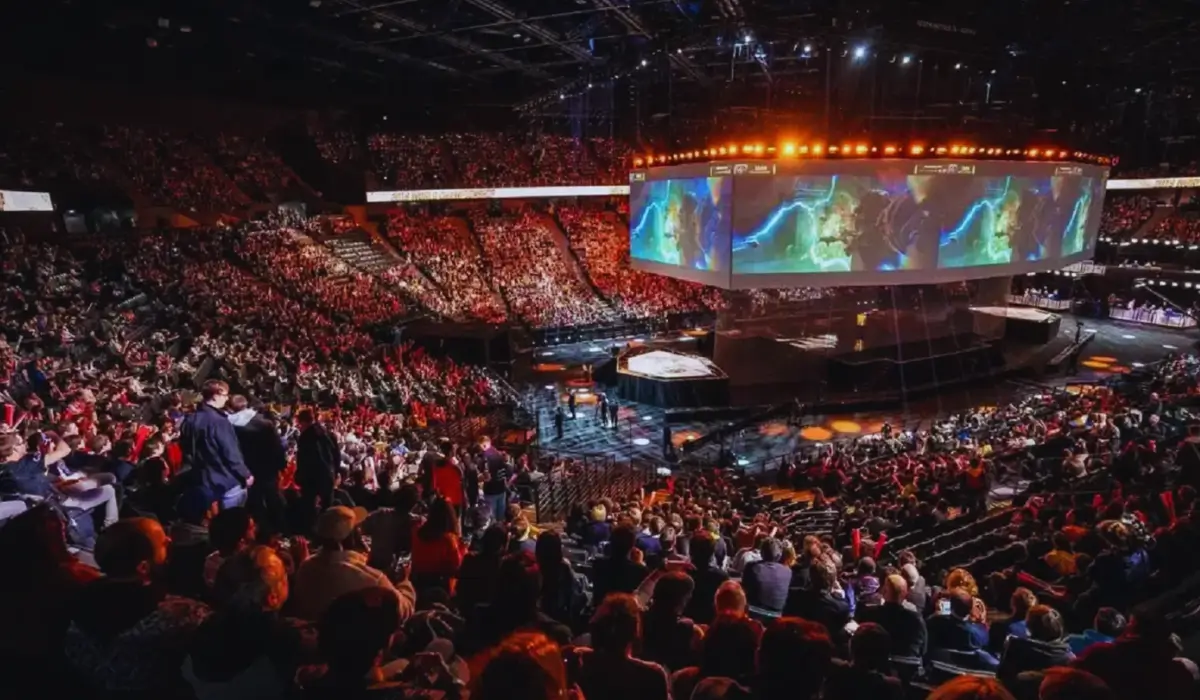
In 2026, Riyadh has firmly established itself as one of the world’s most influential esports capitals. Building on the historic success of last year’s tournament, the Esports World Cup (EWC) returns bigger, more sophisticated, and more globally integrated than ever before.
What began as an ambitious initiative has evolved into a defining pillar of the international gaming ecosystem. Following the record-breaking 2025 edition—where more than 2,000 competitors from over 100 nations competed for a $70 million prize pool—2026 marks the consolidation of Riyadh’s gaming revolution.
The tournament is no longer viewed simply as a championship. It has become a global platform that merges competition, entertainment, business, and culture into a unified esports festival.
From Vision to Global Leadership
The EWC is organized by the Esports World Cup Foundation and aligns closely with Saudi Arabia’s long-term economic transformation strategy under Saudi Vision 2030. The broader objective is to diversify the economy beyond oil by investing in technology, tourism, sports, and digital innovation.
The inaugural edition in 2024 set the stage with a $62.5 million prize pool. The 2025 expansion elevated the tournament to unprecedented levels, both financially and culturally. Now in 2026, the event has transitioned from rapid expansion to strategic global leadership.
Saudi Arabia is not merely hosting tournaments—it is building an esports ecosystem that includes infrastructure, training facilities, partnerships with publishers, and year-round gaming initiatives.
Prize Structure and Competitive Scale
The 2026 edition builds upon the record-setting $70 million prize pool from 2025, maintaining its position as the most lucrative tournament structure in esports history.
The Club Championship format continues to reward organizational consistency across multiple titles, reinforcing long-term team investment rather than single-game dominance.
Previous Prize Distribution Model (2025 Reference):
-
$27 million allocated to Club Championship standings
-
$7 million awarded to the overall Club Champion
-
$38 million distributed across individual game championships
-
$6.5 million in qualifiers and MVP awards
For 2026, refinements in revenue-sharing models and global sponsorship structures further strengthen financial sustainability, ensuring that prize growth aligns with ecosystem stability.
A Diverse and Expanding Game Lineup
One of the defining strengths of the EWC is its multi-title diversity. The tournament blends established esports giants with rising competitive titles, expanding global appeal across demographics.
Returning Competitive Titans
Major titles continuing into 2026 include:
-
League of Legends
-
Dota 2
-
Counter-Strike 2
-
Call of Duty: Black Ops 6
-
EA Sports FC 25
-
Street Fighter 6
-
Tekken 8
-
Rocket League
-
Mobile Legends: Bang Bang
-
Overwatch 2
These franchises anchor viewership and sponsorship value, attracting global fan bases and elite organizations.
New Era Additions and Strategic Expansions
New-generation and crossover additions include:
-
Valorant
-
Blitz Chess competition
-
Crossfire
-
Fatal Fury: City of the Wolves
-
Naraka: Bladepoint
The introduction of Blitz Chess marked a historic crossover between traditional intellectual competition and digital esports. Five-time world chess champion Magnus Carlsen’s participation in 2025 elevated the legitimacy of this integration, and in 2026 the format continues to draw both chess enthusiasts and esports audiences.
Global Influence and Celebrity Integration
The Esports World Cup has successfully bridged competitive gaming with mainstream sports and entertainment.
Football icon Cristiano Ronaldo continues his role as international ambassador, symbolizing the crossover between traditional athletics and digital competition. His involvement has expanded global visibility, particularly across Europe, Asia, and Latin America.
High-profile entertainment performances in prior editions featured global artists such as Post Malone and Alesso. In 2026, the integration of live concerts, influencer activations, and creator tournaments further enhances the festival atmosphere.
Broadcast coverage now spans over 140 countries and 35 languages, with thousands of hours of live-streamed content distributed across digital platforms and traditional sports networks.
Fan Experience: A Gaming Metropolis
Hosted primarily in Riyadh’s Boulevard City entertainment district, the EWC offers far more than competitive matches.
The 2026 fan experience includes:
-
International cosplay competitions
-
VR and simulation arenas
-
Industry panels with developers and publishers
-
Creator meet-and-greets
-
Anime cafés and themed gaming zones
-
Business summits focused on investment and digital innovation
The event has evolved into a hybrid between a global expo, technology conference, and championship arena.
Economic and Strategic Impact
The 2025 tournament generated over $500 million in estimated economic activity through tourism, retail, sponsorship, and media rights. In 2026, that economic multiplier effect is expected to grow as international partnerships expand.
Hotels in Riyadh report high occupancy during the tournament window. Hospitality, broadcasting, logistics, and event production sectors benefit significantly from both temporary and permanent employment opportunities.
More importantly, Saudi Arabia is positioning esports as a long-term industry pillar rather than a single-event spectacle. Investment is flowing into gaming studios, esports academies, and youth development programs, building domestic talent pipelines.
Technology and Infrastructure Leadership
The 2026 Esports World Cup demonstrates advanced infrastructure integration, including:
-
Ultra-low-latency streaming technology
-
AI-powered broadcast analytics
-
Immersive AR/VR audience features
-
Global cloud-based tournament systems
Riyadh’s digital backbone now rivals established esports hubs such as Seoul, Los Angeles, and Shanghai.
The event’s production scale has set new standards for tournament presentation, combining sports-grade lighting, stadium design, and cinematic broadcast techniques.
Why 2026 Marks a Strategic Turning Point
While 2025 was about breaking records, 2026 is about establishing permanence.
Key reasons the 2026 edition stands out:
-
Consolidation of Riyadh as a year-round esports hub
-
Continued global participation from over 100 nations
-
Stable, sustainable prize structures
-
Stronger integration with traditional sports and entertainment
-
Institutional support under Vision 2030
Competitive gaming is no longer niche. It is mainstream, commercialized, and geopolitically relevant.
Conclusion
The Esports World Cup 2026 represents the maturation of a bold vision. What began as an ambitious national project has evolved into one of the most influential events in global esports.
By combining record-breaking competition, cultural crossover, technological innovation, and strategic economic investment, Riyadh has positioned itself at the forefront of the gaming revolution.
The future of esports will be defined not only by prize pools and championships but by ecosystem development, global collaboration, and fan engagement. In that respect, 2026 is not just another tournament year—it is confirmation that competitive gaming has fully entered the global mainstream.