



 By
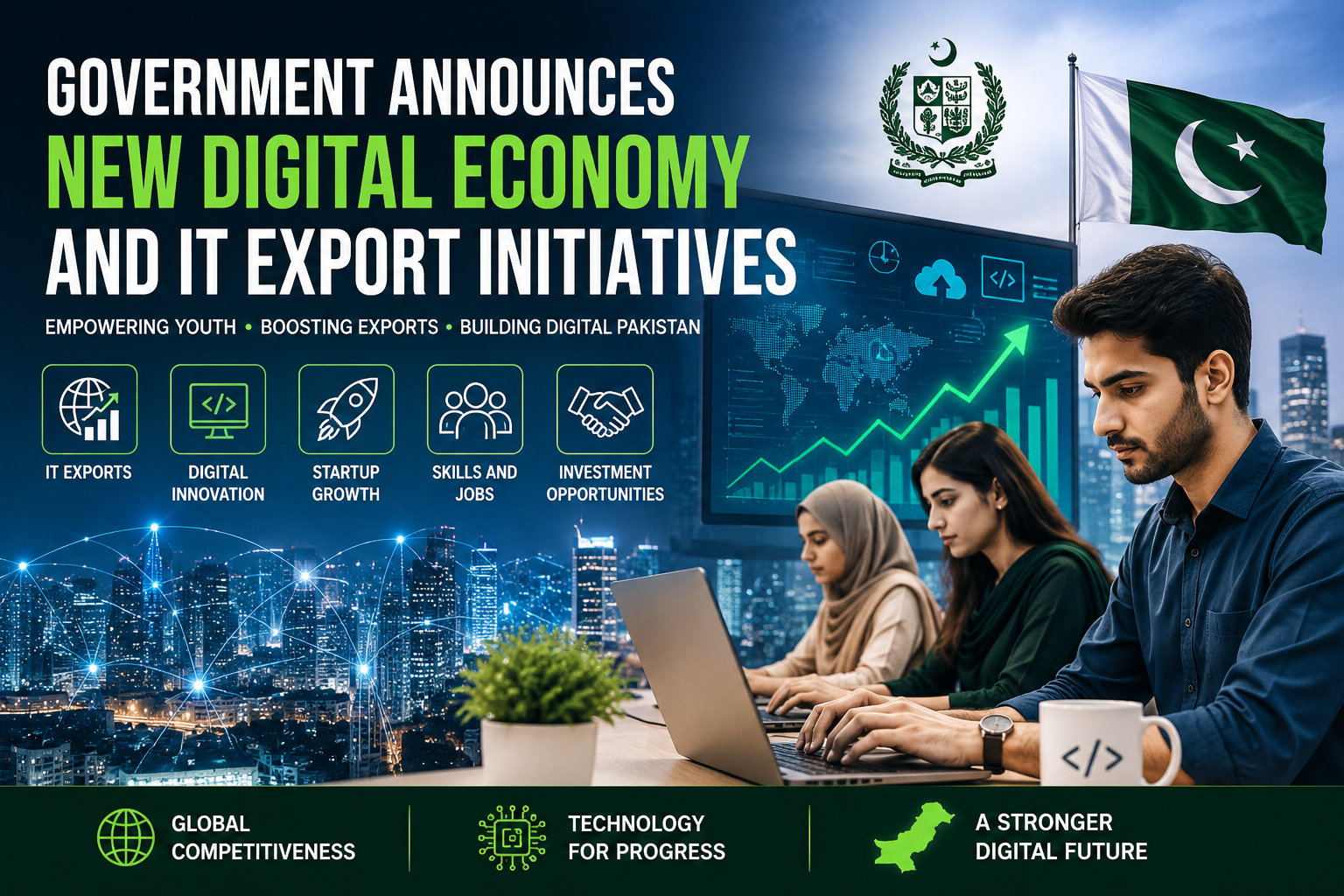
By Pakistan has taken another step toward strengthening its digital economy by introducing new initiatives aimed at increasing information technology (IT) exports, encouraging investment, and creating more opportunities for young professionals. The announcement reflects the government’s ongoing efforts to position the country as a competitive destination for technology businesses and digital services.
Over the past few years, Pakistan’s IT sector has shown steady growth, with software companies, freelancers, and technology startups contributing significantly to the national economy. The latest measures are designed to build on this progress by improving digital infrastructure, supporting innovation, and expanding the country’s presence in international technology markets.
A Focus on IT Export Growth
One of the key priorities of the new initiatives is to increase Pakistan’s IT exports. The technology industry has become one of the country’s fastest-growing sectors, generating valuable foreign exchange through software development, IT consulting, business process outsourcing (BPO), and freelance services.
Government officials believe that improving policies and providing better support for technology companies will help local businesses compete more effectively in international markets. Encouraging exports not only strengthens the economy but also creates new employment opportunities for skilled professionals across the country.
Industry experts have welcomed the move, saying that consistent policy support is essential for maintaining long-term growth in the digital sector.
Support for Startups and Entrepreneurs
The new digital economy plan also places strong emphasis on supporting startups and small technology businesses. Young entrepreneurs continue to play an important role in developing innovative products and services, particularly in areas such as financial technology, artificial intelligence, e-commerce, cybersecurity, and healthcare technology.
Officials have indicated that efforts will continue to improve access to funding, simplify business procedures, and encourage private investment in emerging technology companies.
Creating a supportive environment for startups is expected to help transform new ideas into successful businesses while generating employment for graduates entering the workforce each year.
Expanding Digital Infrastructure
Reliable digital infrastructure remains one of the foundations of a successful digital economy. As part of the initiative, the government plans to continue improving internet connectivity, digital services, and online public platforms.
Better infrastructure allows businesses to operate more efficiently, enables remote work, and supports the growing demand for digital education and online commerce.
Technology experts note that expanding broadband access and improving internet reliability will also benefit rural communities by giving them greater access to digital opportunities.
Creating Opportunities for Pakistan’s Youth
Pakistan has one of the youngest populations in the region, making digital skills increasingly important for future employment.
The government has highlighted the need for training programmes that focus on software development, cloud computing, artificial intelligence, digital marketing, cybersecurity, and other modern technologies.
Educational institutions and technology organizations are expected to play a larger role in preparing students for careers in the digital economy. By investing in skills development, Pakistan can strengthen its workforce while meeting the growing demand for qualified IT professionals around the world.
Boosting Investor Confidence
The latest initiatives are also intended to attract local and international investment in Pakistan’s technology sector.
A stable business environment, improved digital policies, and continued investment in infrastructure can encourage multinational companies to expand their operations in Pakistan. Increased investment not only supports economic growth but also creates opportunities for technology transfer, innovation, and collaboration with international firms.
Business leaders believe that maintaining clear and consistent policies will be essential for attracting long-term investors.
Challenges That Still Need Attention
While the new initiatives have received positive feedback, experts believe several challenges remain.
The IT industry continues to face issues such as internet reliability, access to venture capital, regulatory procedures, and the shortage of highly skilled professionals in specialized fields.
Addressing these challenges will require continued cooperation between government institutions, private companies, universities, and industry associations.
Many experts also stress the importance of policy consistency, which helps businesses plan future investments with greater confidence.
Looking Ahead
Pakistan’s digital economy has considerable potential to become one of the country’s strongest economic sectors. With a growing number of software companies, successful freelancers, and innovative startups, the country already has a solid foundation for future growth.
If the newly announced initiatives are implemented effectively, they could help increase exports, attract investment, improve digital services, and create thousands of new employment opportunities over the coming years.
Continued collaboration between the public and private sectors will be essential to ensuring that Pakistan remains competitive in the rapidly evolving global technology landscape.
Conclusion
The government’s latest digital economy and IT export initiatives represent an important step toward strengthening Pakistan’s technology sector. By focusing on innovation, infrastructure, startup development, digital skills, and international competitiveness, the country aims to unlock new opportunities for businesses and young professionals alike.
As technology continues to shape economies worldwide, sustained investment in Pakistan’s digital future could contribute significantly to economic growth, job creation, and increased global recognition for the country’s expanding IT industry.