


 By
By A devastating car bomb attack on a police checkpoint in Bannu district, located in Pakistan’s northwestern province of Khyber Pakhtunkhwa, killed at least 15 police officers and injured several others. The assault, which took place late on Saturday night, is one of the deadliest attacks on Pakistani security forces in recent months.
US Navy Secretary John Phelan Leaving Trump Administration: What It Means for Defense and Politics
According to police officials, a suicide bomber drove an explosives-laden vehicle into the Fateh Khel police checkpoint, causing a massive explosion that reduced the post to rubble. Moments later, armed militants stormed the site and opened fire on surviving officers, intensifying the attack.
How the Attack Happened
Bannu police officer Muhammad Sajjad Khan said the assault began when the suicide bomber rammed the vehicle into the checkpoint. The powerful blast destroyed nearby structures and vehicles.
After the explosion, more than 100 militants reportedly participated in the attack. Some entered the damaged police post and exchanged gunfire with officers, while others ambushed reinforcements rushing to the scene.
Officials stated that the attackers also used quadcopters and heavy weapons, demonstrating a high level of coordination and planning. Before retreating, militants allegedly kidnapped some police personnel and seized weapons from the station.
Casualties and Rescue Operations
At least 15 police officers were confirmed dead. Rescue teams worked through the night to search the rubble, and three officers were pulled out alive and transported to a nearby hospital, where they were reported to be in stable condition.
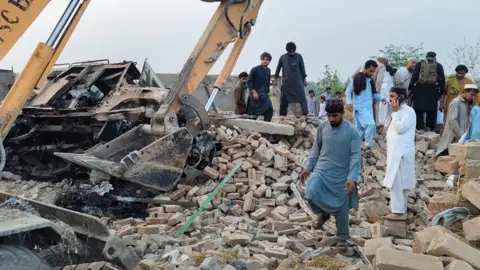
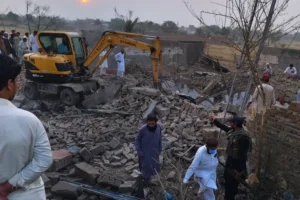
Images from the attack site showed collapsed walls, charred debris, and mangled police vehicles scattered around the checkpoint.
Group Claims Responsibility
A militant alliance known as Ittehad-ul-Mujahideen claimed responsibility for the attack. The group was formed in April 2025 and includes several extremist factions, such as the Hafiz Gul Bahadur Group, Lashkar-e-Islam, and Harkat Inqilab-e-Islami Pakistan.
Security analysts say the group has close ties to Tehreek-e-Taliban Pakistan (TTP), also known as the Pakistani Taliban, which has carried out numerous attacks in Khyber Pakhtunkhwa over the years.
Why Bannu Is Frequently Targeted
Bannu lies close to Pakistan’s border with Afghanistan and has long been vulnerable to militant activity. The region serves as a key transit route and has experienced repeated attacks on security forces.
Pakistan has accused the Afghan Taliban government of allowing militants to use Afghan territory to plan and launch attacks inside Pakistan. The Taliban authorities in Kabul have consistently denied these allegations.
Government Reaction
President Asif Ali Zardari condemned the attack and expressed condolences to the families of the fallen officers.
In an official statement, he said the nation stands “shoulder-to-shoulder with its security forces” and vowed that the “nefarious intentions of terrorists will be defeated.”
Prime Minister and senior military officials also praised the bravery of the police officers who defended the checkpoint under extremely difficult circumstances.
Rising Militancy in Pakistan
The Bannu bombing reflects a broader resurgence of militant violence across Pakistan. Since the collapse of a ceasefire between the Pakistani Taliban and the government in 2022, attacks on security personnel have increased significantly.
Khyber Pakhtunkhwa and Balochistan remain the most affected provinces, with police, military personnel, and civilians frequently targeted in bombings and armed assaults.
Conclusion
The deadly Bannu attack highlights the ongoing security challenges facing Pakistan. The coordinated use of a suicide bomber, armed militants, and drone technology demonstrates the evolving tactics of extremist groups.
As the country mourns the loss of 15 police officers, the attack underscores the urgent need for stronger counterterrorism measures and regional cooperation to curb militancy.
Frequently Asked Questions (FAQs)
1. Where did the attack occur?
The attack occurred at the Fateh Khel police checkpoint in Bannu district, Khyber Pakhtunkhwa, Pakistan.
2. How many people were killed?
At least 15 police officers were killed.
3. Who claimed responsibility?
The militant alliance Ittehad-ul-Mujahideen claimed responsibility.
4. What type of attack was it?
It was a coordinated suicide car bombing followed by an armed assault.
5. Were any officers rescued?
Yes, three officers were pulled from the rubble alive and are in stable condition.
6. What weapons did the attackers use?
They used an explosives-filled vehicle, firearms, heavy weapons, and quadcopters.
7. Why is Bannu a high-risk area?
Its proximity to Afghanistan makes it vulnerable to militant infiltration and attacks.
8. What did the Pakistani government say?
President Asif Ali Zardari condemned the attack and pledged continued support for security forces.
9. What is Ittehad-ul-Mujahideen?
It is a militant alliance formed in 2025 with links to the Pakistani Taliban.
10. Has militancy increased in Pakistan?
Yes, attacks have risen sharply in recent years, particularly in Khyber Pakhtunkhwa and Balochistan.