



 By
By Balochistan Faces Another Deadly Security Crisis
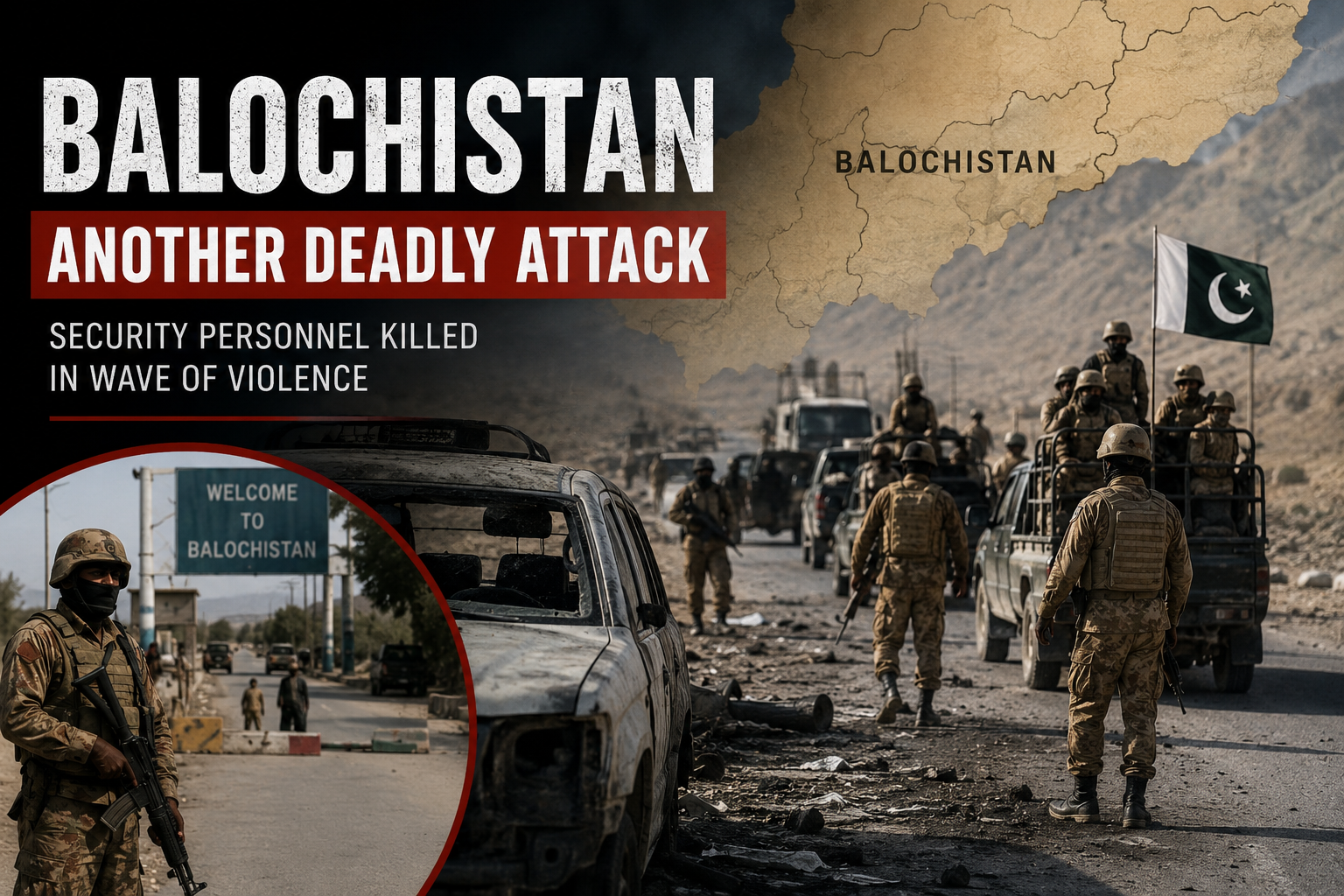
Pakistan’s southwestern province of Balochistan has once again witnessed a serious escalation in violence after a series of coordinated militant attacks claimed the lives of dozens of security personnel. The latest incidents have renewed concerns over law and order in the province, where security forces have been battling separatist militant groups for years.
According to Pakistani authorities, at least 42 police officers and soldiers were killed in multiple attacks carried out over several days. Security officials described the incident as one of the deadliest recent attacks targeting law enforcement personnel in the province.
What Happened?
The violence began when heavily armed militants attacked a police post in Ziarat district. During the assault, several police officers lost their lives while others were taken hostage. Authorities later confirmed that many of the abducted officers were killed by the attackers.
In a separate incident, security personnel travelling along a highway were ambushed, resulting in additional casualties. Pakistani military officials stated that these coordinated attacks were intended to weaken security operations in the region.
Security Forces Launch Counter-Operations
Following the attacks, Pakistan’s military and law enforcement agencies launched extensive search and clearance operations across affected areas of Balochistan.
Officials reported that security forces killed dozens of militants during follow-up operations. Checkpoints were strengthened, intelligence-based operations were expanded, and additional security personnel were deployed to sensitive districts to prevent further attacks.
Prime Minister Chairs High-Level Security Meeting
Prime Minister Shehbaz Sharif travelled to Quetta after the attacks and chaired a high-level security meeting attended by senior military and provincial officials.
During the meeting, he condemned the attacks, expressed condolences to the families of those killed, and reaffirmed the government’s commitment to continuing counterterrorism operations until militant networks are dismantled.
Why Does Balochistan Remain Vulnerable?
Balochistan is Pakistan’s largest province by area but remains sparsely populated and geographically challenging. For decades, the province has experienced insurgency, militant activity, and security operations.
The region has strategic importance because it borders both Iran and Afghanistan and hosts major infrastructure projects, including Gwadar Port. The difficult terrain and longstanding security challenges continue to make the province vulnerable to attacks by armed groups.
Impact on Local Communities
The latest violence has increased anxiety among residents in several districts. Security has been tightened at government offices, highways, and public facilities, while additional patrols have been deployed in sensitive areas.
Families of the victims have called for stronger protection for police officers and security personnel serving in high-risk regions. Public concern has also grown over the recurring cycle of violence affecting daily life in the province.
Looking Ahead
The recent attacks underline the continuing security challenges facing Pakistan in Balochistan. While authorities say counterterrorism operations will continue, analysts believe that lasting peace will require not only improved security measures but also sustained political dialogue, economic development, and stronger governance.
As investigations continue, the government has pledged to bring those responsible to justice while strengthening security across the province.
Conclusion
The deadly attacks in Balochistan mark another difficult chapter in Pakistan’s ongoing struggle against militancy. The loss of security personnel has highlighted the risks faced by those serving in conflict-affected regions and reinforced the need for comprehensive efforts to restore stability. The coming weeks will be crucial as security forces continue operations and authorities work to prevent further violence.
FAQs
1. What happened in Balochistan?
Multiple militant attacks targeted police and military personnel, resulting in at least 42 security force fatalities.
2. Where did the attacks occur?
The main incidents took place in Ziarat district and other parts of Balochistan.
3. Who was targeted?
Police officers and members of Pakistan’s security forces were the primary targets.
4. How did the government respond?
Security forces launched counter-operations, while Prime Minister Shehbaz Sharif chaired a high-level security meeting in Quetta.
5. Why is Balochistan strategically important?
Its location bordering Iran and Afghanistan, along with major infrastructure projects such as Gwadar Port, makes it strategically significant.
6. Were counterterrorism operations launched?
Yes. Pakistani security forces conducted follow-up operations after the attacks and reported killing dozens of militants.
7. How has the violence affected local residents?
Security has been tightened, and residents remain concerned about safety and stability.
8. Are investigations ongoing?
Yes. Authorities are continuing investigations while expanding security operations.
9. What challenges does Balochistan face?
The province faces long-standing insurgency, difficult geography, and ongoing security concerns.
10. What is the government’s priority now?
Preventing further attacks, strengthening security, and maintaining stability across the province.