



 By
By Government Announces New Petroleum Prices
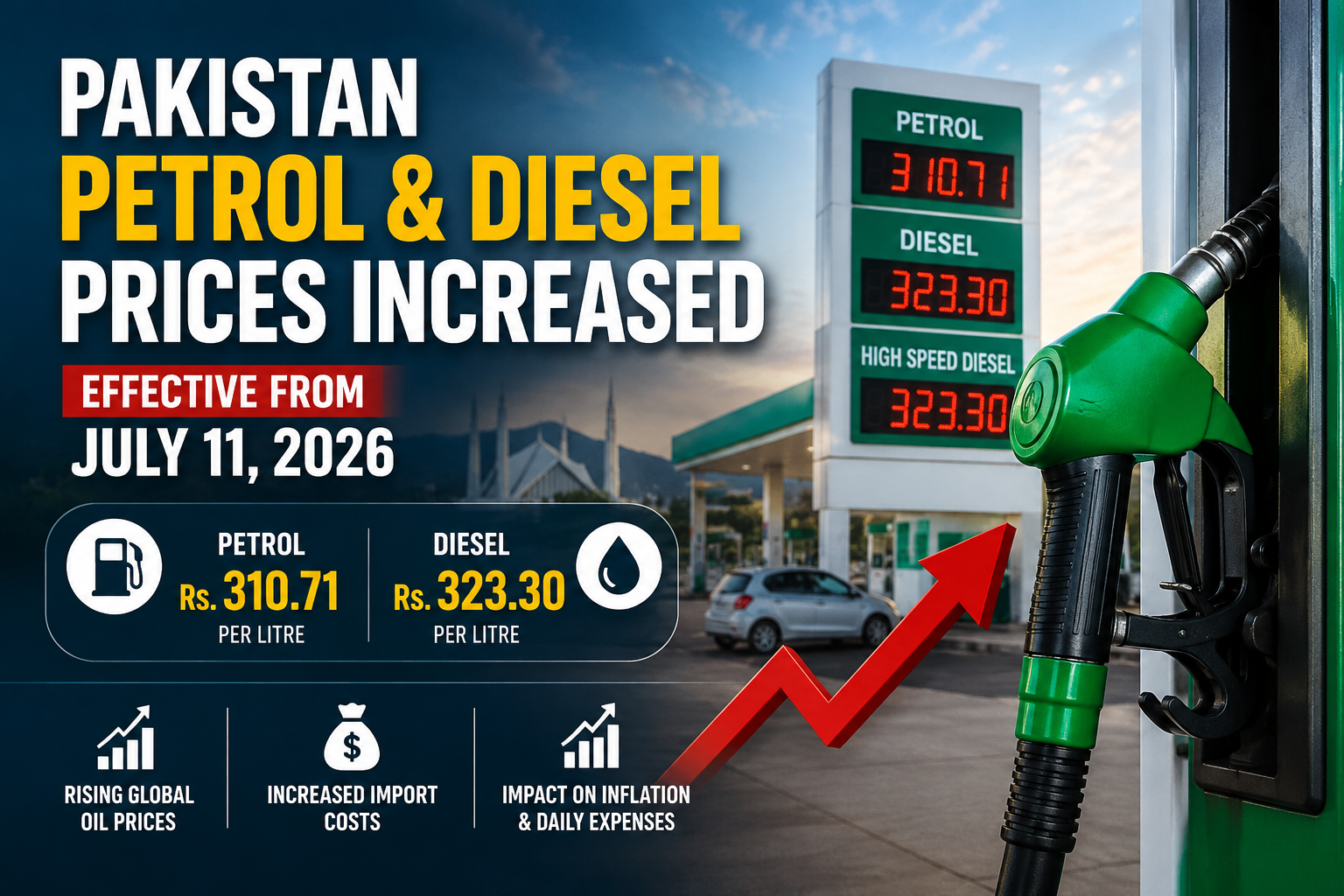
The federal government has announced a fresh increase in petrol and diesel prices, effective from July 11, 2026, bringing another wave of financial pressure for consumers and businesses across Pakistan. The revised prices were issued after a periodic review of international oil prices and import costs, which directly influence domestic petroleum rates.
According to the latest notification, petrol has been increased by Rs13.18 per litre, while high-speed diesel (HSD) has gone up by Rs13.80 per litre. The new prices took effect at midnight on July 11 and will remain applicable until the next fortnightly review unless revised earlier.
The decision comes at a time when many households are already dealing with rising inflation, higher utility bills, and increased living expenses. The latest fuel adjustment is expected to affect transportation costs, food prices, and overall economic activity in the coming weeks.
Revised Petrol and Diesel Prices
Following the latest revision, the official petroleum prices are:
| Product | Previous Price | Increase | New Price |
|---|---|---|---|
| Petrol | Rs297.53 per litre | Rs13.18 | Rs310.71 per litre |
| High-Speed Diesel | Rs309.50 per litre | Rs13.80 | Rs323.30 per litre |
The increase reverses the small reduction announced during the previous review and highlights the continued volatility in global energy markets.
Why Have Fuel Prices Increased?
Pakistan imports a significant portion of its petroleum products, making local fuel prices highly dependent on international crude oil markets. When global oil prices rise or the Pakistani rupee weakens against the US dollar, the cost of importing petroleum increases.
Officials have stated that the latest increase reflects:
- Higher international crude oil prices.
- Increased import costs.
- Exchange rate fluctuations.
- Adjustments in freight and distribution expenses.
- The government’s fortnightly petroleum pricing mechanism.
These factors collectively determine the retail prices of petrol and diesel across the country.
Impact on the Public
The latest fuel price increase is expected to have a direct impact on millions of Pakistanis. Petrol is widely used by motorcycles, cars, and small vehicles, while diesel powers buses, trucks, agricultural machinery, and commercial transport.
As fuel becomes more expensive, transportation costs usually rise, leading to higher prices for goods and services.
Consumers are likely to experience:
- Increased public transport fares.
- Higher costs for ride-hailing and private travel.
- More expensive food and grocery deliveries.
- Rising prices of fruits, vegetables, and essential commodities.
- Additional financial pressure on household budgets.
For families already struggling with inflation, the increase in fuel prices could further reduce purchasing power.
Businesses Face Higher Operating Costs
The business community is also expected to feel the effects of the latest petroleum price adjustment. Industries that rely heavily on transportation and logistics may experience a rise in operational expenses.
Manufacturers, retailers, construction companies, and logistics providers often pass increased transportation costs on to consumers, contributing to higher market prices.
Farmers may also face additional expenses because diesel is commonly used in tractors, tube wells, harvesters, and other agricultural equipment. Higher fuel costs could eventually affect agricultural production and food prices across the country.
Inflation Concerns Continue
Economists believe fuel prices play a significant role in determining inflation because transportation affects nearly every product sold in the market.
When diesel and petrol prices rise, businesses pay more to transport raw materials and finished products. These increased expenses are often reflected in retail prices, creating a chain reaction across multiple sectors of the economy.
With inflation already remaining a concern, the latest fuel increase may add further pressure on consumers and businesses alike.
Public Reaction
The announcement has received mixed reactions from the public. Many citizens have expressed concern over the continued rise in living costs, saying that another increase in fuel prices will make daily expenses even more difficult to manage.
Transport operators are expected to review fare structures, while business associations have urged the government to introduce measures that can reduce the burden on industries and consumers.
Economic experts note that although petroleum prices are influenced by international market conditions, long-term economic stability requires balanced policies that protect both public finances and consumer purchasing power.
What Happens Next?
The government reviews petroleum prices every two weeks based on recommendations prepared after assessing international oil prices, exchange rates, and import costs.
If global crude oil prices decline or the rupee strengthens against the US dollar, consumers could see some relief during future reviews. However, if international energy markets remain volatile, further adjustments cannot be ruled out.
Businesses and consumers will continue monitoring global oil trends as they directly influence domestic fuel prices and the overall cost of living in Pakistan.
Conclusion
The increase in petrol and diesel prices from July 11, 2026, marks another important development for Pakistan’s economy. While the government says the adjustment reflects international market realities and import costs, the decision is expected to raise transportation expenses, increase business operating costs, and contribute to inflation.