


 By
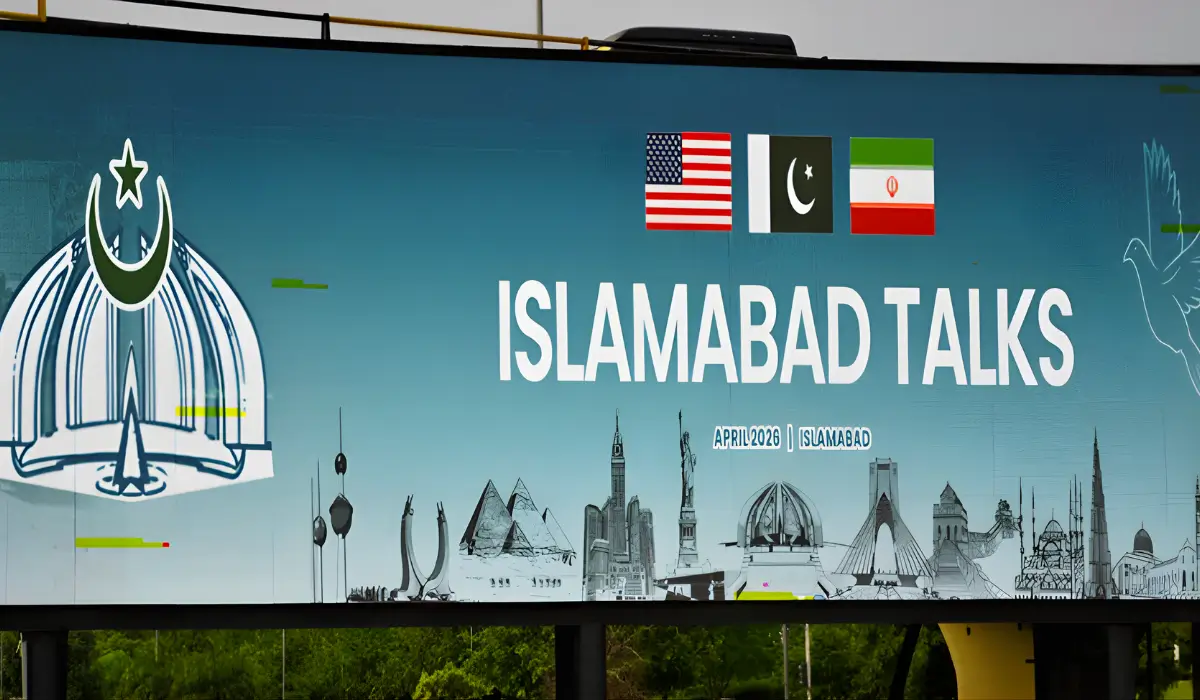
By As tensions between the United States and Iran continue to dominate global geopolitical discussions, new developments suggest that a second round of technical-level talks may take place as early as Monday in Islamabad. According to Pakistani government sources cited by Anadolu, logistical preparations are already underway to host delegations from both countries in what could become a pivotal moment in efforts to end weeks of conflict that have disrupted energy markets and destabilized parts of the Middle East.
While no official confirmation has been issued by Washington or Tehran, multiple reports indicate that Pakistan is increasingly being positioned as a central diplomatic venue for indirect and technical negotiations between the two rival powers.
Islamabad as the Emerging Diplomatic Hub
Pakistan’s capital has rapidly evolved into an unexpected center for high-level international diplomacy. Following earlier rounds of indirect discussions between the United States and Iran, Islamabad has reportedly facilitated backchannel communications and preliminary meetings aimed at de-escalating tensions.
According to sources familiar with the matter, technical teams from both countries are expected to arrive in Islamabad on Sunday, with talks potentially beginning on Monday. The goal of these meetings is to refine earlier discussions and work toward a draft framework that could eventually lead to a broader political agreement.
If successful, the technical-level negotiations would represent a critical step forward in a process that has so far been marked by uncertainty, fragile ceasefire arrangements, and shifting diplomatic signals.
What the Technical Talks Aim to Achieve
Unlike high-level political negotiations, technical talks focus on detailed policy and implementation issues. In this case, discussions between US and Iranian delegations are expected to cover:
- Energy and shipping security arrangements
- Sanctions compliance mechanisms
- Nuclear-related technical concerns
- Verification and monitoring frameworks
- Maritime access and regional stability measures
Sources suggest that these technical discussions are intended to produce a draft agreement that could later be reviewed and approved by senior political leadership from both countries.
One Pakistani source described the process as a step toward “maximum understanding” before moving into the final phase of negotiations.
A Potential High-Level Signing Ceremony
Perhaps the most striking claim emerging from diplomatic sources is the possibility of a high-profile signing ceremony in Islamabad if a final agreement is reached.
According to reports, once a draft agreement is finalized, leaders including US President Donald Trump and Iranian President Masoud Pezeshkian could travel to Islamabad to formally sign the deal. Some reports also suggest that other regional leaders may participate in the ceremony, highlighting the broader international significance of the negotiations.
Although such an event would be unprecedented in recent diplomatic history, it underscores Pakistan’s growing role as a facilitator of dialogue between global rivals.
However, officials have emphasized that these developments remain conditional and dependent on the progress of technical negotiations.
Trump’s Remarks and International Signals
US President Donald Trump has also commented on the possibility of travel to Pakistan in connection with a potential agreement. Speaking to reporters, he stated that if a deal is finalized, he “might go to Islamabad” for the signing ceremony.
While Trump’s remarks remain non-committal, they reflect a broader acknowledgment that negotiations are progressing, even if significant hurdles remain.
At the same time, US media outlets have reported that Monday has been tentatively identified as the target date for the next round of talks. Iranian sources have similarly indicated that delegations from both sides are expected to travel to Islamabad over the weekend.
Despite these reports, no official confirmation has been issued by either government regarding the timing or format of the negotiations.
Pakistan’s Expanding Diplomatic Role
Pakistan’s emergence as a key facilitator in US–Iran discussions is the result of sustained diplomatic engagement across multiple levels of government and military leadership.
In recent weeks, Pakistan has engaged both sides through coordinated diplomatic channels, while also maintaining active outreach to regional powers including Saudi Arabia, Qatar, and Turkey.
This multi-track diplomacy appears designed to reduce tensions in the broader Middle East while also reinforcing Pakistan’s role as a neutral intermediary capable of facilitating dialogue between adversarial states.
Military Diplomacy and Regional Engagement
A significant component of Pakistan’s diplomatic efforts has involved its military leadership. Field Marshal Asif Munir, Pakistan’s Chief of Army Staff, recently completed a three-day visit to Iran, where he held high-level meetings with senior political and military officials.
During his visit, Munir met Iranian President Masoud Pezeshkian, Foreign Minister Abbas Araghchi, and senior military commanders. Discussions reportedly focused on regional security, diplomatic coordination, and mechanisms for sustaining peace.
According to Pakistan’s Inter-Services Public Relations (ISPR), Munir emphasized the importance of dialogue, de-escalation, and peaceful resolution of disputes through sustained diplomatic engagement.
Iranian officials, in turn, expressed appreciation for Pakistan’s role in facilitating communication and hosting earlier rounds of discussions.
The Strait of Hormuz and Energy Security
One of the key regional issues linked to the broader US–Iran conflict is the security of maritime trade routes, particularly the Strait of Hormuz. This narrow waterway is one of the most critical global shipping chokepoints, through which a significant portion of the world’s oil supply passes.
Recent tensions have raised concerns about the stability of energy flows through the region, prompting urgent diplomatic efforts to prevent further disruption.
Iranian officials recently stated that the Strait of Hormuz remains “completely open” for commercial shipping, a signal aimed at reassuring global markets. However, the broader security environment remains fragile, and any escalation could quickly impact global energy prices.
Previous Negotiations and Ongoing Challenges
The upcoming talks follow an earlier round of discussions held in Islamabad over the previous weekend. That session reportedly lasted more than 16 hours but ended without a formal agreement.
Despite the lack of immediate breakthrough, both sides continued to engage through indirect communication channels facilitated by Pakistan. This continuity suggests that while disagreements remain significant, diplomatic momentum has not been fully lost.
The earlier ceasefire, secured on April 8, helped temporarily stabilize the situation, but it remains fragile and subject to expiration if no further agreement is reached.
Conflicting Signals and Diplomatic Uncertainty
While optimism surrounds the possibility of renewed talks, there remains considerable uncertainty about timing, participation, and outcomes.
No official announcement has been made by the United States, Iran, or Pakistan confirming the Monday meeting. This has led to speculation that preparations may still be in early stages.
At the same time, multiple sources—including media reports and diplomatic insiders—indicate that logistical arrangements are already underway, including preparations for delegations and media coverage.
This mix of official silence and unofficial confirmation reflects the sensitive nature of the negotiations, where public statements are often carefully controlled to avoid political or strategic misinterpretation.
Why Pakistan Matters in This Process
Pakistan’s involvement in facilitating US–Iran dialogue is notable for several reasons:
- Geopolitical positioning – Pakistan maintains relations with both Western and regional powers.
- Security credibility – Its military and diplomatic institutions are seen as capable of managing sensitive negotiations.
- Neutral venue advantage – Islamabad offers a politically neutral location acceptable to both sides.
- Regional stability interest – Pakistan has a direct interest in preventing escalation in neighboring regions.
By leveraging these factors, Pakistan has positioned itself as a rare intermediary capable of bridging deeply divided geopolitical actors.
What Happens Next
The coming days are likely to be critical. If technical talks begin in Islamabad as expected, they could determine whether broader political negotiations move forward or stall.
Key questions include:
- Will both delegations confirm participation at the last minute?
- Can technical experts agree on a draft framework?
- Will ceasefire conditions hold long enough to support diplomacy?
- And most importantly, can trust be built between two long-standing adversaries?
Conclusion
The possibility of US–Iran technical talks in Islamabad marks a significant moment in ongoing diplomatic efforts to resolve a complex and volatile conflict. While no official confirmation has been issued, multiple sources suggest that preparations are already in motion, with Pakistan playing a central role in facilitating dialogue.
If successful, these talks could lay the groundwork for a broader agreement with far-reaching implications for regional stability, global energy markets, and international diplomacy.
For now, however, the situation remains fluid. The world is watching closely to see whether Islamabad can help transform fragile communication into a lasting diplomatic breakthrough.