


 By
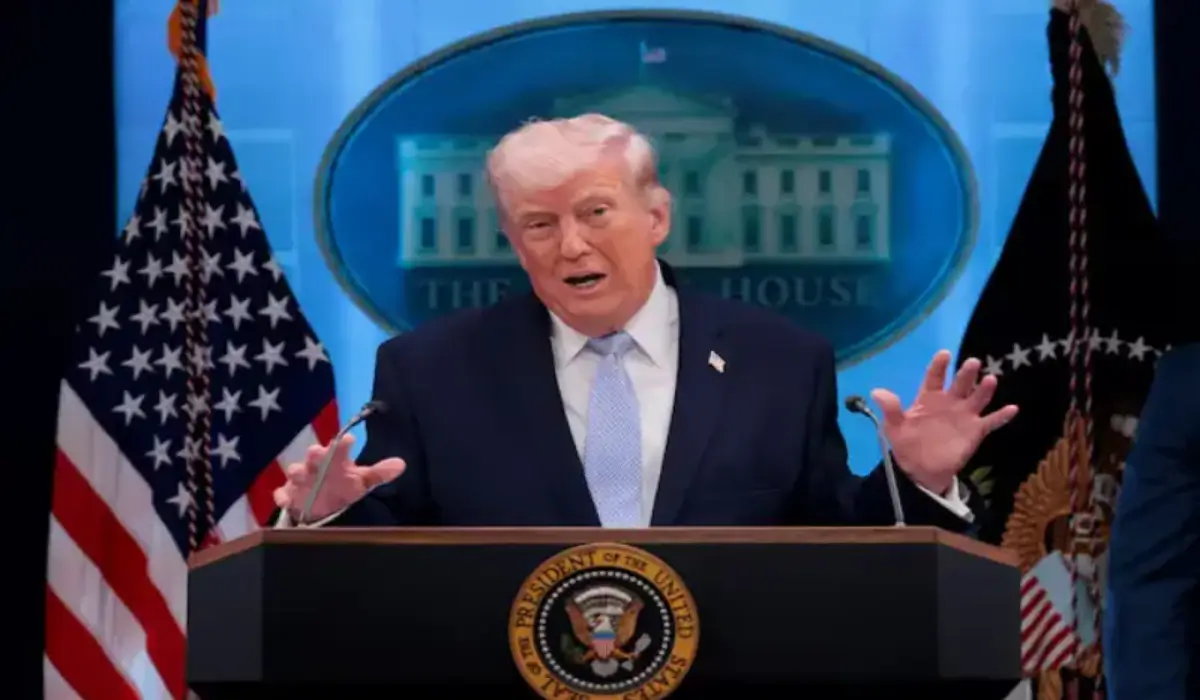
By The global diplomatic spotlight has once again shifted to Islamabad as the United States prepares to send a high-level delegation for a second round of crucial negotiations with Iran. Announced by Donald Trump, the move signals renewed efforts to de-escalate tensions that have been building across the Gulf region.
However, uncertainty clouds the initiative. While Washington has confirmed its participation, Tehran has yet to officially endorse the talks, raising questions about whether meaningful dialogue can take place at all.
This unfolding diplomatic effort represents a critical moment not only for the United States and Iran but also for global stability, energy markets, and the evolving role of Pakistan as a mediator.
A High-Stakes Diplomatic Return to Islamabad
The upcoming negotiations mark the second round of talks in Islamabad, following an intense first session that took place just a week earlier. That initial meeting lasted an extraordinary 21 hours but failed to produce a breakthrough.
Despite the lack of immediate success, diplomatic channels remained active behind the scenes. Officials from both sides engaged in backchannel communications, attempting to narrow differences and prepare the ground for another round.
Now, the United States is making a renewed push.
The American delegation will be led by JD Vance, accompanied by key figures including Steve Witkoff and Jared Kushner. Their presence underscores the seriousness of Washington’s intent and the high stakes involved.
Iran’s Uncertain Participation
While Washington’s plans are clear, Iran’s position remains ambiguous.
Iranian state media has dismissed reports suggesting confirmed participation in the talks. Officials have described such claims as inaccurate and have criticized the United States for what they call inconsistent and excessive demands.
Several factors are contributing to Iran’s hesitation:
- Ongoing U.S. economic sanctions
- A naval blockade targeting Iranian ports
- Escalating rhetoric from Washington
- Concerns over trust and negotiation fairness
In statements circulated through official channels, Iranian authorities have suggested that the current environment is not conducive to constructive dialogue.
At the same time, there are indications that Iran may still send representatives, possibly arriving in Islamabad at the last minute. This uncertainty reflects a broader strategic calculation—keeping options open while avoiding premature commitments.
Escalation at Sea: A Dangerous Backdrop
The diplomatic tensions are unfolding alongside a worrying escalation in the Gulf region.
President Trump recently claimed that U.S. naval forces seized an Iranian-flagged cargo vessel attempting to bypass a blockade in the Gulf of Oman. This incident has significantly raised the stakes, bringing the two nations closer to direct confrontation.
The situation is particularly sensitive because it involves the Strait of Hormuz—one of the world’s most critical maritime chokepoints. A substantial portion of global oil shipments passes through this narrow corridor, making any disruption a matter of international concern.
Trump has also accused Iran of violating a temporary ceasefire by opening fire on foreign vessels, including ships linked to European countries. Iran, however, disputes these claims, adding to the confusion and mistrust.
Trump’s Hardline Messaging
Even as diplomatic efforts continue, Donald Trump has maintained a firm and confrontational tone.
In his statement announcing the delegation’s visit, Trump emphasized that the United States is offering what he described as a “fair and reasonable deal.” However, he coupled this with stark warnings about the consequences of failure.
He suggested that if Iran refuses to agree, the United States could target critical infrastructure, including power plants and bridges. Such remarks have heightened tensions and raised concerns about the possibility of military escalation.
This combination of diplomacy and pressure reflects a broader strategy—engage in talks while maintaining leverage through economic and military means.
Pakistan’s Role as an “Honest Broker”
Amid this complex situation, Pakistan has emerged as a key diplomatic player.
By hosting the talks in Islamabad, Pakistan has positioned itself as a neutral ground where both sides can engage. Diplomatic sources describe the country as an “honest broker,” capable of facilitating dialogue between two deeply mistrustful adversaries.
Pakistan’s involvement carries several implications:
- It enhances the country’s international standing
- It demonstrates its ability to mediate high-stakes conflicts
- It places Islamabad at the center of global diplomacy
Behind the scenes, Pakistani officials have been actively working to ensure that both sides remain engaged. These efforts include backchannel communications and confidence-building measures aimed at reducing tensions.
Security Preparations in Islamabad and Rawalpindi
With the arrival of high-level delegations, security has become a top priority.
Authorities in Islamabad and Rawalpindi have implemented extensive measures to ensure safety. Over 18,000 security personnel have been deployed in the capital, with additional reinforcements brought in from across Punjab.
Key steps include:
- Sealing off the Red Zone
- Establishing multiple checkpoints
- Deploying police, Rangers, and Frontier Corps units
- Securing hotels designated for visiting delegations
Advance teams have already begun arriving, signaling that preparations are well underway.
These measures reflect not only the importance of the talks but also the potential risks associated with hosting such high-profile negotiations.
The Ceasefire Factor
Adding urgency to the situation is a temporary ceasefire set to expire soon.
The ceasefire has provided a brief window for diplomacy, but its future remains uncertain. If it lapses without a new agreement in place, tensions could escalate rapidly.
Both sides have accused each other of violations, further complicating efforts to extend or formalize the arrangement.
The upcoming talks in Islamabad are therefore seen as a critical opportunity to stabilize the situation before it deteriorates further.
Behind-the-Scenes Diplomacy
Despite the public rhetoric, diplomatic insiders suggest that the situation may be more nuanced than it appears.
Sources familiar with the process indicate that much of the aggressive language from both Washington and Tehran is aimed at domestic audiences. In reality, negotiations are reportedly ongoing behind closed doors.
According to one source, the process is “moving in a positive direction,” although significant challenges remain.
Key unresolved issues include:
- Sanctions relief
- Security guarantees
- Maritime access and trade routes
- Regional military presence
These are complex and deeply contentious topics that cannot be resolved quickly. However, the continued engagement suggests that both sides may still be interested in finding a path forward.
Global Implications
The outcome of these talks will have far-reaching consequences.
Energy Markets
Any disruption in the Strait of Hormuz could trigger a spike in global oil prices, affecting economies worldwide.
Regional Stability
An escalation could draw in other countries, potentially leading to a broader conflict in the Middle East.
International Diplomacy
The success or failure of these talks will shape perceptions of diplomatic effectiveness in resolving major conflicts.
A Moment of Uncertainty—and Opportunity
As Islamabad prepares to host the second round of negotiations, the atmosphere is one of cautious optimism mixed with deep uncertainty.
On one hand, the presence of a high-level U.S. delegation signals a genuine effort to pursue diplomacy. On the other hand, Iran’s hesitation and the ongoing tensions at sea highlight the fragility of the situation.
Much will depend on whether both sides can move beyond public posturing and engage in meaningful dialogue.
Conclusion
The decision by Donald Trump to send negotiators to Islamabad marks a significant moment in the ongoing US-Iran crisis. With global attention focused on Pakistan, the upcoming talks could either pave the way for de-escalation or deepen existing divisions.
While challenges remain, the continued willingness to engage—however tentative—offers a glimmer of hope.
In a world increasingly defined by conflict and competition, the success of diplomacy in Islamabad could serve as a powerful reminder that dialogue, even under difficult circumstances, remains essential.
For now, all eyes are on Islamabad as it hosts what may prove to be a निर्णing chapter in modern geopolitics.